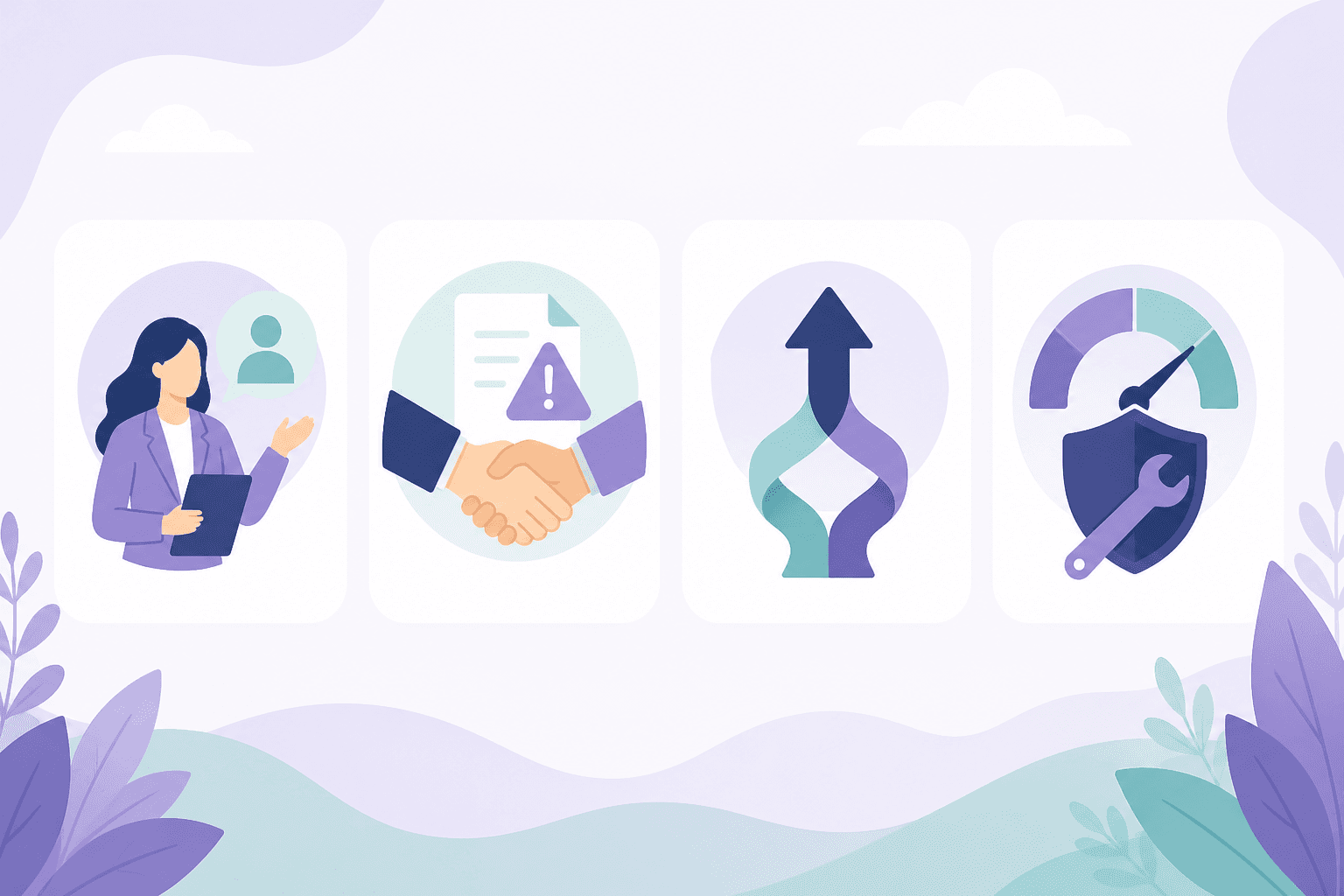
Ads blur debt help into one blurry promise. In reality, credit counseling, debt settlement, consolidation, and credit repair do different jobs with different risks. Mixing them up can cost money and time.
Use this as a map. Then verify details with primary consumer resources before you enroll in anything paid.
Credit counseling
Usually nonprofit advice and budgeting help. May include a debt management plan. Educates first. Does not erase balances. Fees should be clear up front.
Best first stop when cash flow is confusing and you want a guided budget review. See what credit counseling actually does.
Debt consolidation
A new loan or card pays off old debts. One payment. Savings depend on rate, fees, and term. You still repay what you owe, ideally cheaper and simpler.
Works only if you qualify for better terms and stop recharging old accounts. See what is debt consolidation.
Debt settlement
Negotiate to pay less than owed, often after falling behind. High credit risk, fees, possible collections pressure, and possible tax consequences on forgiven amounts.
Usually a last-resort style path after DIY Extra, hardship, counseling, and consolidation are understood. See debt settlement: how it works and the risks.
Credit repair
Disputing inaccurate report items can help. No one can legally remove accurate, timely negative items for a fee. Be wary of guaranteed score jumps.
Learn how to spot credit repair scams on the FTC’s credit repair scams page.
Quick comparison cues
- Counseling: budget help, possible DMP, education first
- Consolidation: new credit replaces old balances
- Settlement: pay less than owed, often after delinquency
- Repair: fix report errors, not erase accurate history
How to choose a starting path
- If reports have errors: dispute those first while staying current
- If cash flow is chaotic: start with counseling education
- If credit is strong and rates are the issue: price consolidation
- If you can free Extra: try DIY Focus before paid programs
- Treat settlement as higher risk and later in the sequence
Where to learn more
The CFPB Ask CFPB page on the difference between these options is a solid plain-language starting point.
See the FTC article on how to get out of debt for consumer-focused basics you can use alongside a self-managed Focus plan.
A story of mismatched help
Someone with messy cash flow and fair credit often needs counseling education or a DMP more than settlement. Someone with strong credit and high APRs may need consolidation or DIY Extra more than repair. Someone with report errors needs disputes more than a new loan. Matching the tool to the diagnosis is the whole game.
Sales funnels ignore diagnosis. Your job is to name the diagnosis first.
Questions that reveal the product
- Will I still owe the full balances if I follow through?
- Are you creating a new loan?
- Do I need to stop paying creditors, and what are the risks?
- What exactly happens to my credit reports?
- What are all fees and when are they charged?
DIY as the fifth path
Not every problem needs a paid product. Must pay plus Extra plus Focus plus a spending pause is a complete path for many households. Paid tools are optional accelerators or structure aids.
How ads blur language
Words like “relief,” “program,” “enrollment,” and “forgiveness” appear across unrelated products. Ask for the legal mechanism in plain English. If the salesperson cannot explain it simply, do not buy complexity.
Building a one-page decision memo
Write the problem in one sentence. Write the path you chose in one sentence. Write the cost, the timeline, and the exit rule. That memo protects you from the next ad that tries to reopen the decision.
- Problem statement
- Chosen path
- Monthly cost
- Expected timeline
- What would make you switch paths
Cost shapes across the four paths
Counseling education may be low cost or free. DMP fees are ongoing. Consolidation costs show up as interest and loan fees. Settlement costs show up as company fees plus credit and stress costs. Repair costs should be minimal if you dispute errors yourself using official channels.
Map costs on one page. Surprise fees are how mismatched paths feel expensive even when the monthly number looked friendly.
Sequence that prevents regret
A practical sequence for many people: fix report errors, build a budget, try DIY Extra, talk to creditors about hardship, consider counseling or consolidation with math, and only then evaluate settlement if nothing else fits. Skipping to the loudest ad reverses that sequence.
Bring this map to any sales call
When a marketer calls, ask them to place their product into one of the four buckets: counseling, consolidation, settlement, or repair. If they claim all four at once, thank them and hang up. Real products have a primary mechanism.
Then ask for total cost, timeline, credit effects, and what happens if you miss a payment. Write the answers. Compare to DIY Extra for ninety days. Comparison is your consumer power.
Keep the CFPB comparison page bookmarked so you are not arguing from memory under pressure. Primary sources beat scripts.
When you finish choosing a path, tell one trusted person what you chose and why. Accountability reduces the odds that the next ad reopens a settled decision. Clarity loves witnesses.
Your next step
Name the problem you actually have: cash-flow chaos, high rates, report errors, or unaffordable balances after other options. Match one path to that problem. Keep covering Must pay while you decide.